Dwarf Shrub Bog
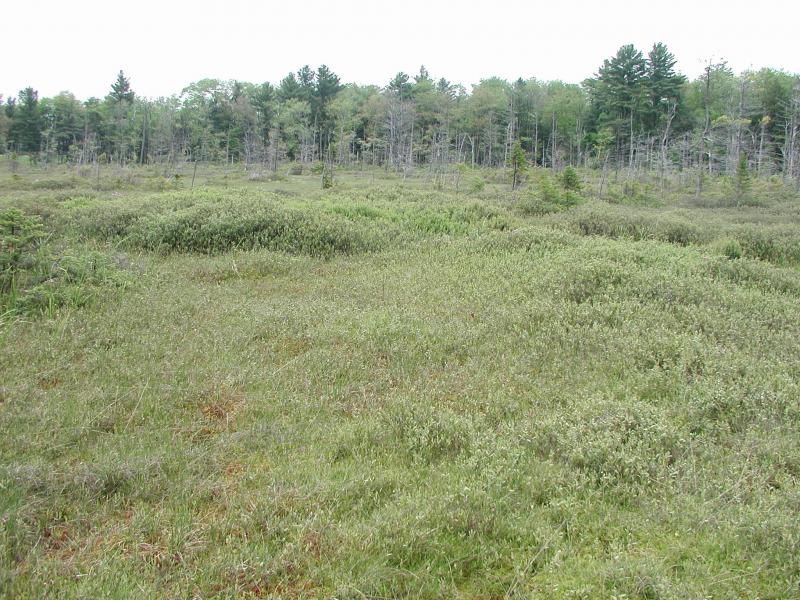
Dwarf shrub bog at Amber Lake
Timothy G. Howard
- System
- Palustrine
- Subsystem
- Open Peatlands
- State Protection
- Not Listed
Not listed or protected by New York State.
- Federal Protection
- Not Listed
- State Conservation Status Rank
- S3
Vulnerable in New York - Vulnerable to disappearing from New York due to rarity or other factors (but not currently imperiled); typically 21 to 80 populations or locations in New York, few individuals, restricted range, few remaining acres (or miles of stream), and/or recent and widespread declines.
- Global Conservation Status Rank
- G4
Apparently Secure globally - Uncommon in the world but not rare; usually widespread, but may be rare in some parts of its range; possibly some cause for long-term concern due to declines or other factors.
Summary
Did you know?
Cranberries (Vaccinium macrocarpon, V. oxycoccos) grow wild in dwarf shrub bogs. They also grow on farms in the northeastern states, including New York, in settings that mimic bogs. The surface of a dwarf shrub bog, as with other bogs, is predominately peat on top of silt and clay. Commercial cranberries grow on low-lying branches in impermeable beds layered with sand, peat, gravel, and clay. They need an inch of water a week to grow. Growers use water to protect cranberries from frost during cold months and hot weather in the summer. Commercial bogs use a system of wetlands, uplands, ditches, flumes, ponds, and other water bodies.
State Ranking Justification
There are several hundred occurrences statewide. Many documented occurrences have good viability and are protected on public land or private conservation land. This community has statewide distribution, and includes several very large, high quality examples. The current trend of this community is probably stable for occurrences on public land, or declining slightly elsewhere due to moderate threats related to development pressure or alteration to the natural hydrology. This community has declined moderately to substantially from historical numbers likely correlated with peat mining and excessive clearing/development of the surrounding landscape.
Short-term Trends
The numbers and acreage of dwarf shrub bogs in New York have probably remained stable in recent decades as a result of wetland protection regulations. There may be a few cases of slight decline due to alteration of hydrology from impoundments (conversion to other palustrine community types).
Long-term Trends
The numbers and acreage of dwarf shrub bogs in New York have probably declined moderately to substantially from historical numbers likely correlated with initial peat mining and logging of the surrounding landscape (increasing nutrient run-off into bogs).
Conservation and Management
Threats
Dwarf shrub bogs are threatened by development and its associated run-off (e.g., agricultural, residential, roads, railroads, golf courses, campgrounds), recreational overuse (e.g., snowmobiles, hiking trails causing peat compaction, boat access points), and habitat alteration in the adjacent landscape (e.g., mining, logging, pollution, nutrient loading). Deer over-browsing and heavily used deer trails are a threat to a few of these bogs. Alteration to the natural hydrology is also a threat to this community (e.g., impoundments, blocked culverts, beaver). Hydrological alterations that result in the invasion of woody plants (e.g., red maple and shrubs) are a particular threat to bogs. Orchid collection and fire suppression are additional threats related to bogs. Several examples of dwarf shrub bog are threatened by invasive species, such as reedgrass (Phragmites australis ssp. australis) and purple loosestrife (Lythrum salicaria).
Conservation Strategies and Management Practices
Because dwarf shrub bogs are naturally acidic and low in nutrients, they are particularly susceptible to alteration by elevated nutrient inputs. Bogs may require larger buffers than other wetland types because of their high susceptibility to changes in nutrient concentrations. Direct impacts are typically most serious within 300 feet (90 m) of wetland areas (Sperduto et al. 2000).
Where practical, establish and maintain a natural wetland buffer to reduce storm-water, pollution, and nutrient run-off, while simultaneously capturing sediments before they reach the wetland. Buffer width should take into account the erodibility of the surrounding soils, slope steepness, and current land use. Wetlands protected under Article 24 are known as New York State "regulated" wetlands. The regulated area includes the wetlands themselves, as well as a protective buffer or "adjacent area" extending 100 feet landward of the wetland boundary (NYS DEC 1995). If possible, minimize the number and size of impervious surfaces in the surrounding landscape. Avoid habitat alteration within the wetland and surrounding landscape. For example, roads and trails should be routed around wetlands, and ideally not pass through the buffer area. If the wetland must be crossed, then bridges and boardwalks are preferred over filling. Restore dwarf shrub bogs that have been unnaturally disturbed (e.g., remove obsolete impoundments and ditches in order to restore the natural hydrology). Prevent the spread of invasive exotic species into the wetland through appropriate direct management, and by minimizing potential dispersal corridors, such as roads.
Development and Mitigation Considerations
When considering road construction and other development activities minimize actions that will change what water carries and how water travels to this community, both on the surface and underground. Water traveling over-the-ground as run-off usually carries an abundance of silt, clay, and other particulates during (and often after) a construction project. While still suspended in the water, these particulates make it difficult for aquatic animals to find food; after settling to the bottom of the wetland, these particulates bury small plants and animals and alter the natural functions of the community in many other ways. Thus, road construction and development activities near this community type should strive to minimize particulate-laden run-off into this community. Water traveling on the ground or seeping through the ground also carries dissolved minerals and chemicals. Road salt, for example, is becoming an increasing problem both to natural communities and as a contaminant in household wells. Fertilizers, detergents, and other chemicals that increase the nutrient levels in wetlands cause algae blooms and eventually an oxygen-depleted environment where few animals can live. Herbicides and pesticides often travel far from where they are applied and have lasting effects on the quality of the natural community. So, road construction and other development activities should strive to consider: 1. how water moves through the ground, 2. the types of dissolved substances these development activities may release, and 3. how to minimize the potential for these dissolved substances to reach this natural community.
Inventory Needs
Survey for occurrences statewide to advance documentation and classification of peatlands. A statewide review of the acidic peatlands is desirable, similar to the studies done in New Hampshire (Sperduto et al. 2000), Massachusetts (Kearsley 1999), and similar to what New York Natural Heritage did for rich fens (Olivero 2001).
Research Needs
Research is needed to fill information gaps about dwarf shrub bogs, especially to advance our understanding of their classification, ecological processes (e.g., fire), hydrology, floristic variation, characteristic fauna, and bog development and succession. This research will provide the basic facts necessary to assess how human alterations in the landscape affect peatlands, and supply a framework for evaluating the relative value of peat bogs (Damman and French 1987).
Rare Species
- Aeshna clepsydra (Mottled Darner) (guide)
- Aeshna subarctica (Subarctic Darner) (guide)
- Arethusa bulbosa (Dragon's Mouth Orchid) (guide)
- Asio flammeus (Short-eared Owl) (guide)
- Betula pumila (Swamp Birch) (guide)
- Calypso bulbosa var. americana (Calypso) (guide)
- Carex chordorrhiza (Creeping Sedge) (guide)
- Carex haydenii (Cloud Sedge) (guide)
- Circus hudsonius (Northern Harrier) (guide)
- Cistothorus stellaris (Sedge Wren) (guide)
- Enallagma laterale (New England Bluet) (guide)
- Epitheca semiaquea (Mantled Baskettail) (guide)
- Euphagus carolinus (Rusty Blackbird) (guide)
- Fagitana littera (Marsh Fern Moth) (guide)
- Gaylussacia bigeloviana (Bog Huckleberry) (guide)
- Geocaulon lividum (False Toad Flax) (guide)
- Glyptemys muhlenbergii (Bog Turtle) (guide)
- Neottia bifolia (Southern Twayblade) (guide)
- Platanthera ciliaris (Orange Fringed Orchid) (guide)
- Pseudolycopodiella caroliniana (Carolina Clubmoss) (guide)
- Rhododendron canadense (Rhodora) (guide)
- Salix pyrifolia (Balsam Willow) (guide)
- Somatochlora cingulata (Lake Emerald) (guide)
- Somatochlora forcipata (Forcipate Emerald) (guide)
- Somatochlora incurvata (Incurvate Emerald) (guide)
- Sparganium natans (Small Bur-reed) (guide)
- Sphagnum andersonianum (Anderson's Peat Moss) (guide)
Range
New York State Distribution
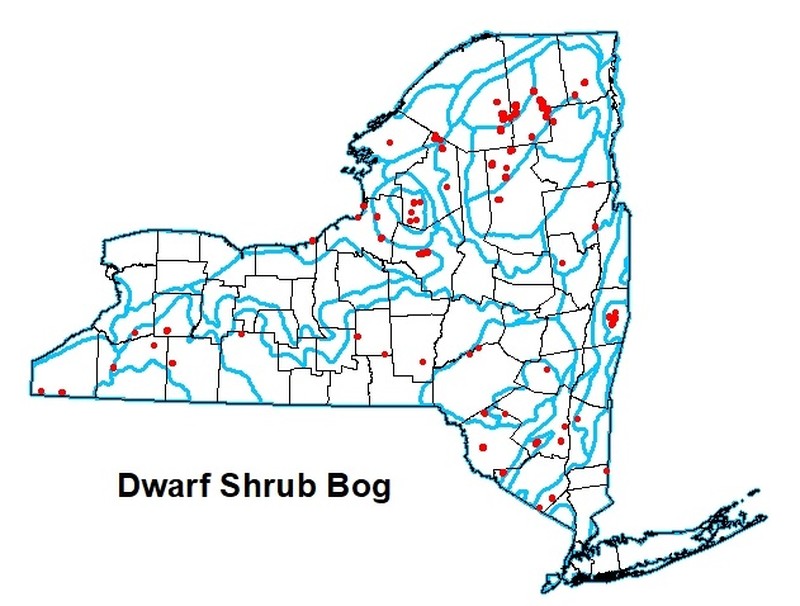
This community is currently found throughout upstate New York with numerous examples in the northwestern Adirondacks and the Tug Hill region. Several scattered examples of dwarf shrub bog are known from eastern Lake Ontario, the northern edge of the High Allegheny Plateau, the Rensselaer Plateau, and the lower Hudson Valley. It is absent from the coastal areas where it is replaced with coastal plain poor fen.
Global Distribution
The range is probably widespread throughout Canada and along the northeastern fringe of the United States. The range is estimated to span northeast to Newfoundland, northwest possibly to northwestern Canada, west to Minnesota, southwest to Michigan, and southeast to Massachusetts, New Jersey, and Pennsylvania.
Best Places to See
- Emmons Pond
- Rainbow Shores Preserve, North and South Ponds SCFWH (Significant Coastal Fish and Wildlife Habitat) (Oswego County)
- Harriman State Park (Orange County)
- Minnewaska State Park Preserve (Ulster County)
- Lime Hollow Preserve
- Catskill Park (Sullivan County)
Identification Comments
General Description
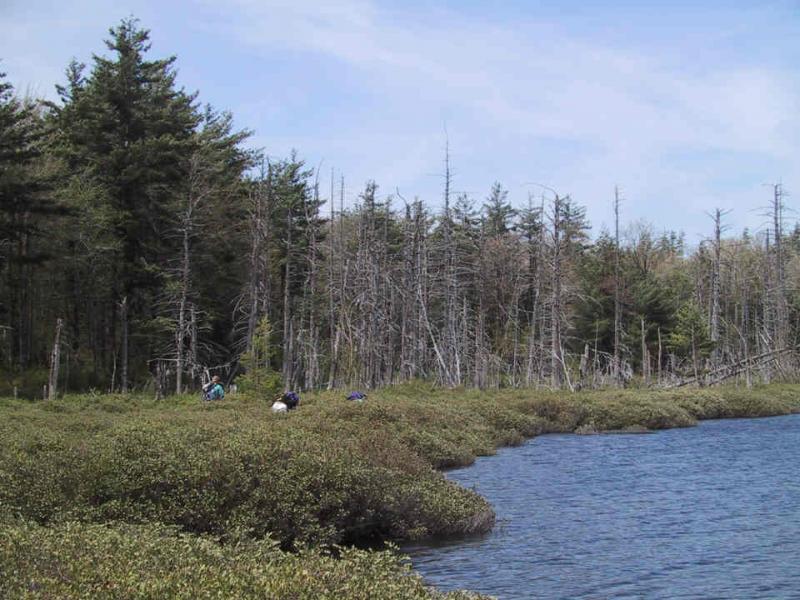
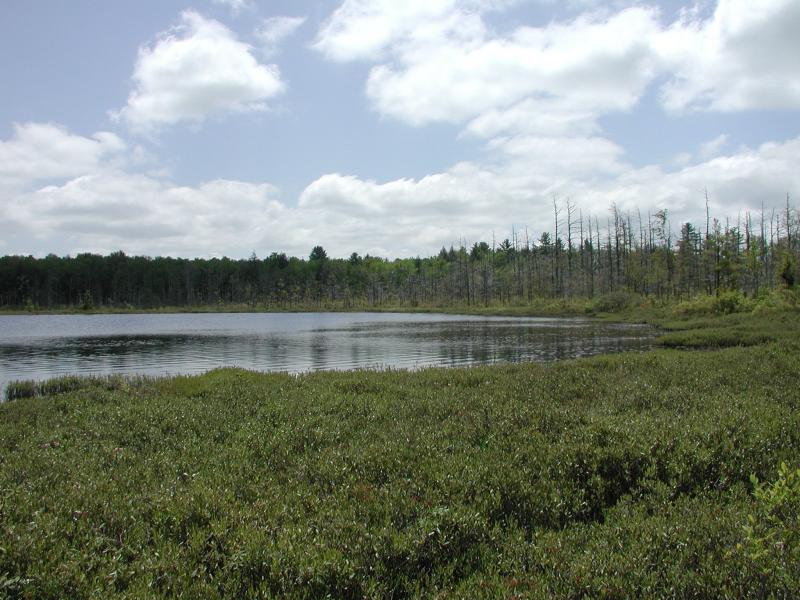
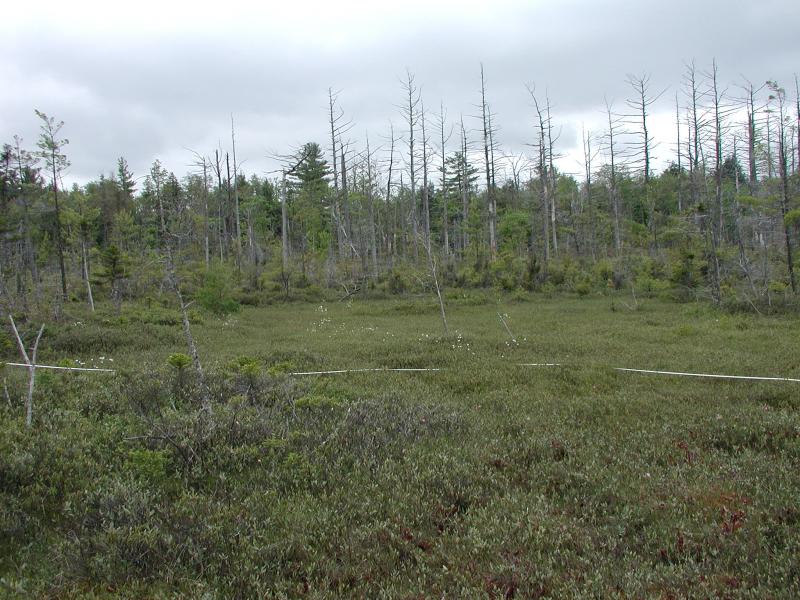
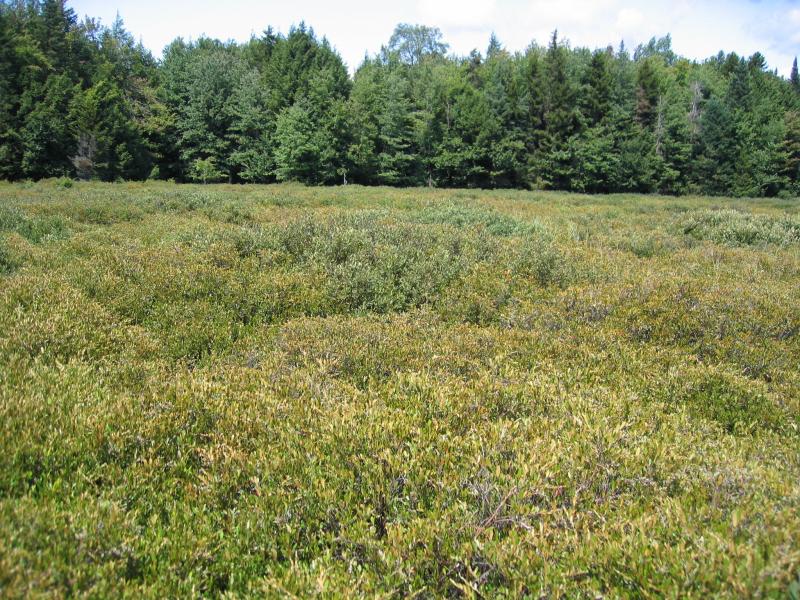
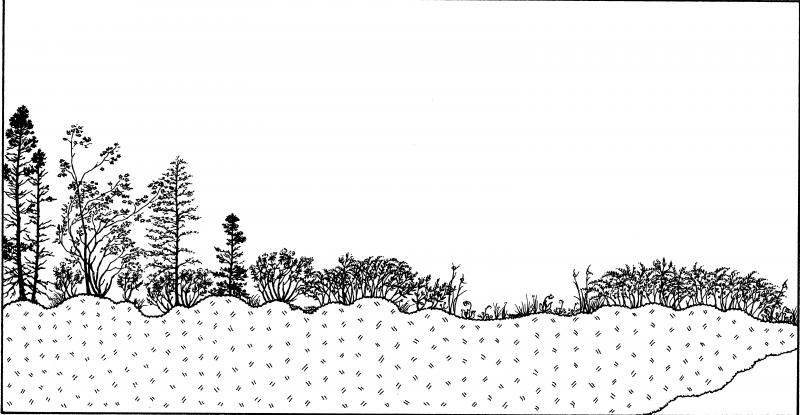
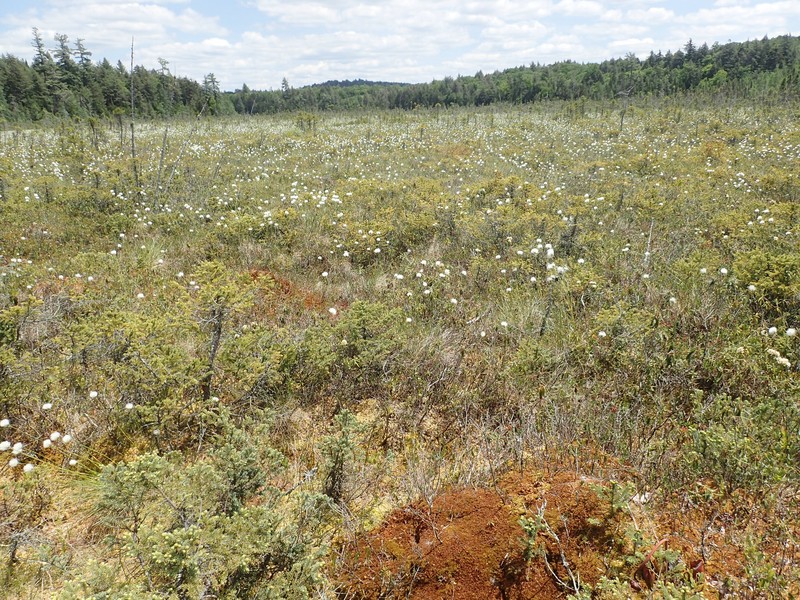
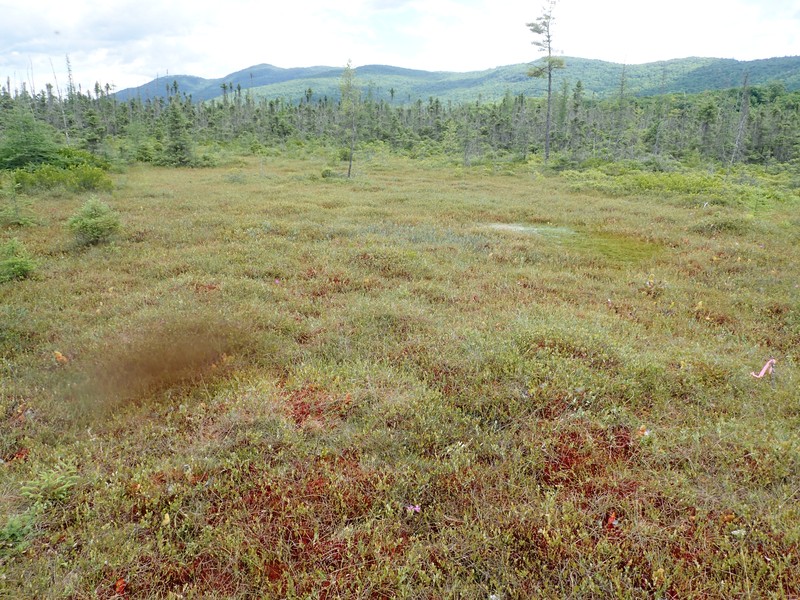
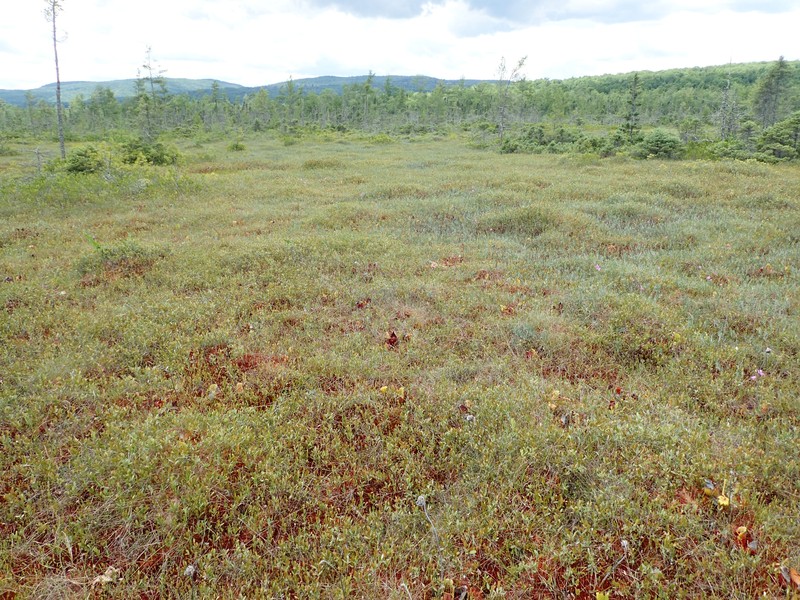
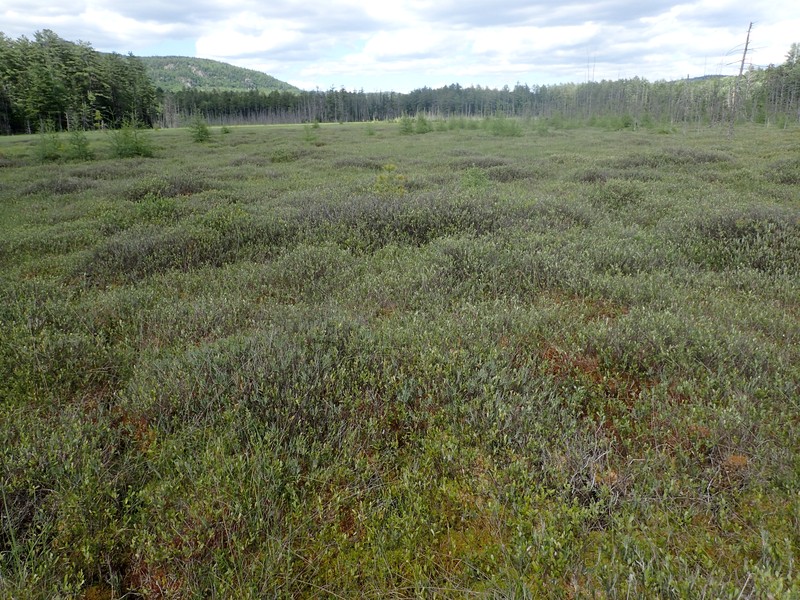
A peatland dominated by low-growing evergreen ericaceous (heath-like) shrubs and peat mosses. The surface of the peatland has small mounds and depressions called hummocks and hollows. These bogs have more than 50% cover of low-growing shrubs, and the hummocks tend to have a higher abundance of shrubs than the hollows. Water is usually nutrient-poor and acidic. The dominant shrub is often leatherleaf (Chamaedaphne calyculata), which may make up more than 50% of the total vegetation cover. Shrubs are typically 1 m or less in height, and are taller than the herbs.
Characters Most Useful for Identification
A peatland dominated by dwarf evergreen shrubs (>50% cover), such as leatherleaf (Chamaedaphne calyculata).
Elevation Range
Known examples of this community have been found at elevations between 250 feet and 1,840 feet.
Best Time to See
Stunted black spruce (Picea mariana), tamarack (Larix laricina), and red maple (Acer rubrum) are often found in a dwarf shrub bog; their striking look may be enjoyed year-round. The carnivorous pitcher-plants (Sarracenia purpurea) and sundews (Drosera spp.) can often be found growing among the peat moss. These plants flower in midsummer.
Dwarf Shrub Bog Images
Timothy G. Howard
Aissa L. Feldmann
Timothy G. Howard
Timothy G. Howard
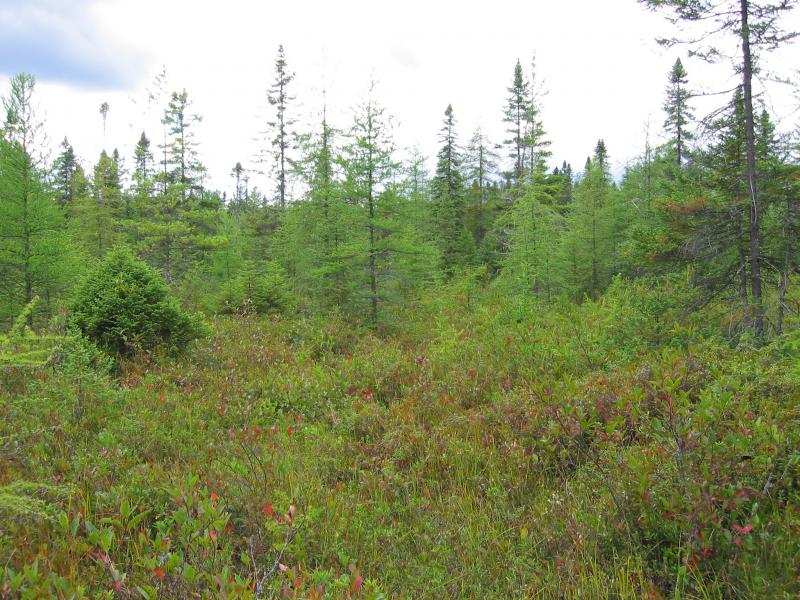
Shane Gebauer
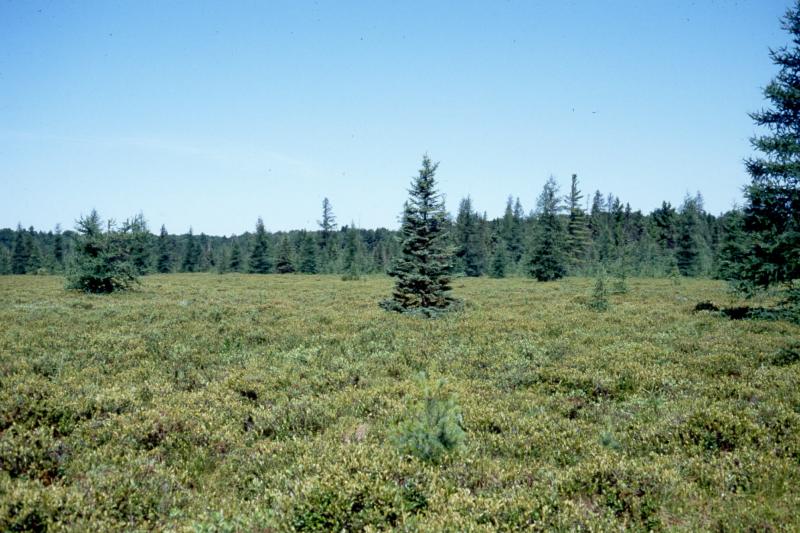
Stephen M. Young
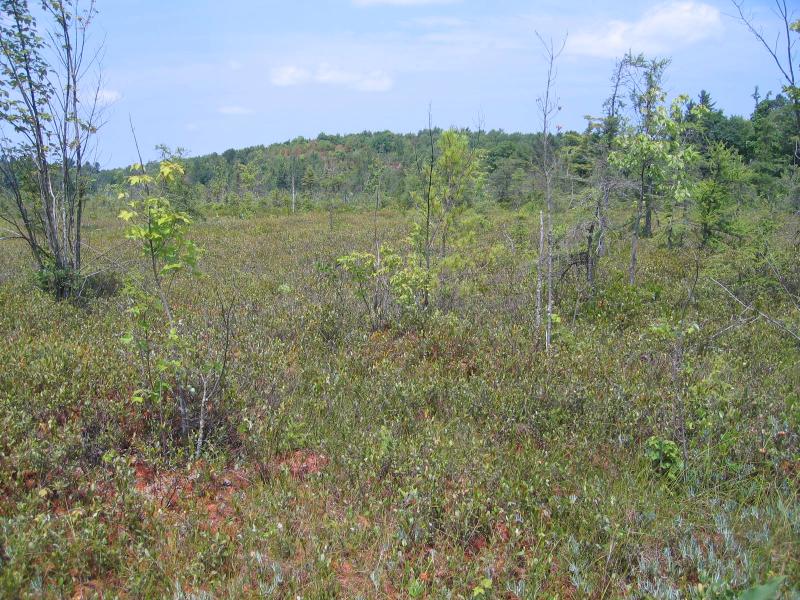
Gregory J. Edinger
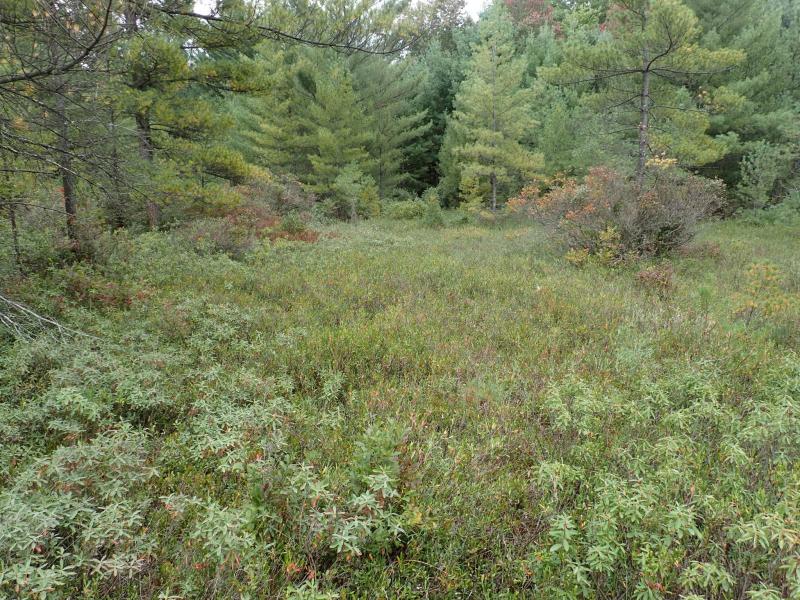
Gregory J. Edinger
Gregory J. Edinger
Darcy P. May
Gregory J. Edinger
Gregory J. Edinger
Gregory J. Edinger
Gregory J. Edinger
Classification
International Vegetation Classification Associations
This New York natural community encompasses all or part of the concept of the following International Vegetation Classification (IVC) natural community associations. These are often described at finer resolution than New York's natural communities. The IVC is developed and maintained by NatureServe.
- Leatherleaf / Tawny Cottongrass / Red Peatmoss Acidic Peatland (CEGL006513)
- Sheep Laurel - Leatherleaf - (Black Spruce) / Cup Lichen species Acidic Peatland (CEGL006225)
- Rhodora - Leatherleaf Acidic Peatland (CEGL006514)
NatureServe Ecological Systems
This New York natural community falls into the following ecological system(s). Ecological systems are often described at a coarser resolution than New York's natural communities and tend to represent clusters of associations found in similar environments. The ecological systems project is developed and maintained by NatureServe.
- Atlantic Coastal Plain Northern Bog (CES203.893)
- Eastern Boreal-Sub-boreal Bog (CES103.581)
Characteristic Species
-
Shrubs < 2m
- Andromeda polifolia var. latifolia (bog-rosemary)
- Aronia melanocarpa (black chokeberry)
- Chamaedaphne calyculata (leatherleaf)
- Decodon verticillatus (water-willow)
- Gaylussacia baccata (black huckleberry)
- Kalmia angustifolia var. angustifolia (sheep laurel, sheep-kill)
- Kalmia polifolia (bog laurel)
- Rhododendron groenlandicum (Labrador-tea)
- Spiraea alba var. latifolia (broad-leaved meadow-sweet)
- Spiraea tomentosa (steeplebush)
- Vaccinium corymbosum (highbush blueberry)
- Vaccinium macrocarpon (cranberry)
- Vaccinium oxycoccos (small cranberry)
-
Tree saplings
- Acer rubrum var. rubrum (common red maple)
- Larix laricina (tamarack)
- Picea mariana (black spruce)
-
Epiphytes
- boreal oakmoss (Evernia mesomorpha)
- monk's-hood lichen (Hypogymnia physodes)
-
Herbs
- Anchistea virginica (Virginia chain fern)
- Carex canescens ssp. canescens (typical hoary sedge)
- Carex magellanica ssp. irrigua (bog sedge)
- Carex trisperma (three-fruited sedge)
- Drosera rotundifolia (round-leaved sundew)
- Eriophorum virginicum (tawny cotton-grass)
- Hypericum virginicum (Virginia marsh St. John's-wort)
- Rhynchospora alba (white beak sedge)
- Sarracenia purpurea (purple pitcherplant)
-
Nonvascular plants
- Sphagnum angustifolium
- Sphagnum fallax
- Sphagnum fuscum
- Sphagnum magellanicum
- Sphagnum papillosum
- Sphagnum rubellum
Similar Ecological Communities
- Black spruce-tamarack bog
(guide)
Dwarf shrub bog tree cover must be less than 50%, and is usually less than 20%. Examples with greater than 20% cover of uniformly-spaced tall trees (>5 m) may grade into black spruce-tamarack bog.
- Inland poor fen
(guide)
Dwarf shrub bogs are dominated (50% cover or more) by low (<1 m tall) heath shrubs, such as leatherleaf that overtops the short sedges and other bog herbs. Whereas, inland poor fens are dominated by taller sedges and other herbs that overtop the short shrubs. In addition, the inland poor fen shrub layer usually has less than 50% cover.
- Medium fen
(guide)
Medium fens are usually dominated, or co-dominated, by wooly-fruited sedge (Carex lasiocarpa ssp. americana) and sweet-gale (Myrica gale) in the bayberry family (Myricaceae) with lesser amounts of the heath shrubs. Medium fens may range from a dwarf shrubland dominated by sweet gale to a perennial grassland dominated by wooly-fruited sedge, or have roughly equal amounts of shrubs and herbs. Dwarf shrub bogs are dominated by shrubs (<1 m tall) in the heath family (Ericaceae). Leatherleaf (Chamaedaphne calyculata) is typically dominant with lesser amounts of sheep laurel (Kalmia angustifolia), bog laurel (Kalmia polifolia), Labrador tea (Rhododendron groenlandicum), bog rosemary (Andromeda polifolia), black huckleberry (Gaylusaccia baccata), with blueberries and cranberries (Vaccinium spp.). Medium fens tend to have higher pHs (4.5 to 6.5) than dwarf shrub bogs.
- Patterned peatland
(guide)
Patterned peatlands are large peatlands with a gentle slope or divide in which the vegetation consists of a mosaic of high and low areas (relative to water levels) that are called strings and flarks, respectively.
- Perched bog
(guide)
Perched bog peat depth is generally shallower than many peatlands, often less than 50 cm deep. Perched bog peat must be shallow enough, and the bedrock must be strongly influencing the hydrology, otherwise the occurrence may grade into open peatlands characterized by deeper peats such as inland poor fen or dwarf shrub bog.
- Shrub swamp
(guide)
Dwarf shrub bogs must have deep enough peat to be a peatland, otherwise they may grade into a mineral soil wetland such as a shrub swamp. Shrub swamp shrubs are usually not dwarf or evergreen.
Vegetation
Percent cover
This figure helps visualize the structure and "look" or "feel" of a typical Dwarf Shrub Bog. Each bar represents the amount of "coverage" for all the species growing at that height. Because layers overlap (shrubs may grow under trees, for example), the shaded regions can add up to more than 100%.
Additional Resources
References
Andrus, R.E. 1980. Sphagnaceae (Peat Moss Family) of New York State. Bulletin No. 442. New York State Museum. Albany, NY.
Bray, W.L. 1915. The development of the vegetation of New York State. New York State College of Forestry, Tech. Publ. No. 3, Syracuse, NY.
Cowardin, L.M., V. Carter, F.C. Golet, and E.T. La Roe. 1979. Classification of wetlands and deepwater habitats of the United States. U.S. Fish and Wildlife Service. Washington, D.C. 131 pp.
Damman, A.W.H. and T.W. French. 1987. The ecology of peat bogs of the glaciated northeastern United States: a community profile. U.S. Fish and Wildlife Service Biological Report 85(7.16). 100 pp.
Edinger, G. J., D. J. Evans, S. Gebauer, T. G. Howard, D. M. Hunt, and A. M. Olivero (editors). 2014. Ecological Communities of New York State. Second Edition. A revised and expanded edition of Carol Reschke’s Ecological Communities of New York State. New York Natural Heritage Program, New York State Department of Environmental Conservation, Albany, NY. https://www.nynhp.org/ecological-communities/
Edinger, Gregory J., D.J. Evans, Shane Gebauer, Timothy G. Howard, David M. Hunt, and Adele M. Olivero (editors). 2002. Ecological Communities of New York State. Second Edition. A revised and expanded edition of Carol Reschke's Ecological Communities of New York State. (Draft for review). New York Natural Heritage Program, New York State Department of Environmental Conservation. Albany, NY. 136 pp.
Johnson, Charles W. 1985. Bogs of the northeast. University Press of New England, Hanover, New Hampshire.
Karlin, E.F. and L.M. Lynn. 1988. Dwarf-shrub bogs of southern Catskills Mountain region of New York. Bulletin Torrey Botanical Club 115:209-217.
Karlin, E.F. and R.E. Andrus. 1986. Sphagnum vegetation of the low shrub bogs of northern New Jersey and adjacent New York. Bull. Torrey Botanical Club 113(3):281-287.
Kearsley, J. 1999. Non-forested acidic peatlands of Massachusetts: A statewide inventory and vegetation classification. Massachusetts Natural Heritage and Endangered Species Program, Westborough, MA.
Langdon, Stephen F., M. Dovciak, and D.J. Leopold. 2020. Tree Encroachment Varies by Plant Community in a Large Boreal Peatland Complex in the Boreal-Temperate Ecotone of Northeastern USA. Wetlands. https://doi.org/10.1007/s13157-020-01319-z
New York Natural Heritage Program. 2024. New York Natural Heritage Program Databases. Albany, NY.
New York Natural Heritage Program. No date. Field forms database: Electronic field data storage and access for New York Heritage ecology, botany, and zoology. New York Natural Heritage Program, New York State Department of Environmental Conservation. Albany, NY.
New York State Department of Environmental Conservation. 1995. Freshwater Wetlands: Delineation Manual. July 1995. New York State Department of Environmental Conservation. Division of Fish, Wildlife, and Marine Resources. Bureau of Habitat. Albany, NY.
Olivero, Adele M. 2001. Classification and Mapping of New York's Calcareous Fen Communities. A summary report prepared for the Nature Conservancy - Central/Western New York Chapter with funding from the Biodiversity Research Institute. New York Natural Heritage Program, New York State Department of Environmental Conservation. Albany, NY. 28 pp. plus nine appendices.
Reschke, Carol. 1990. Ecological communities of New York State. New York Natural Heritage Program, New York State Department of Environmental Conservation. Latham, NY. 96 pp. plus xi.
Sperduto, D.D. 2000. A classification of wetland natural communities in New Hampshire. New Hampshire Natural Heritage Inventory, Concord, New Hampshire.
Sperduto, D.D. and C.V. Cogbill. 1999. Alpine and subalpine vegetation of the White Mountains, New Hampshire. New Hampshire Natural Heritage Inventory, Concord, New Hampshire.
Sperduto, D.D. and W.F. Nichols. 2000. Exemplary bogs and fens of New Hampshire. New Hampshire Natural Heritage Inventory, Concord, New Hampshire.
Sperduto, D.D., W.F. Nichols, and N. Cleavitt. 2000. Bogs and fens of New Hampshire. New Hampshire Natural Heritage Inventory, Concord, New Hampshire.
Links
About This Guide
Information for this guide was last updated on: December 8, 2023
Please cite this page as:
New York Natural Heritage Program. 2024.
Online Conservation Guide for
Dwarf shrub bog.
Available from: https://guides.nynhp.org/dwarf-shrub-bog/.
Accessed April 26, 2024.