Oligotrophic Dimictic Lake
Oligotrophic Dimictic Lake
David M. Hunt
- System
- Lacustrine
- Subsystem
- Natural Lakes And Ponds
- State Protection
- Not Listed
Not listed or protected by New York State.
- Federal Protection
- Not Listed
- State Conservation Status Rank
- S3
Vulnerable in New York - Vulnerable to disappearing from New York due to rarity or other factors (but not currently imperiled); typically 21 to 80 populations or locations in New York, few individuals, restricted range, few remaining acres (or miles of stream), and/or recent and widespread declines.
- Global Conservation Status Rank
- G4
Apparently Secure globally - Uncommon in the world but not rare; usually widespread, but may be rare in some parts of its range; possibly some cause for long-term concern due to declines or other factors.
Summary
Did you know?
Oligotrophic lakes are low in nutrients and primary production, rich in oxygen throughout, and have good water clarity. Dimictic lakes turn over twice a year, during the spring and the fall. This remixes dissolved oxygen and nutrients, needed by plants and animals in the lake. In the fall, the surface water becomes cooler and denser than the bottom waters. This cooler water sinks to the bottom, mixing the lake water. In the winter as temperatures drop further, ice forms on top of the lake and stops any further mixing. During the spring, the lake is heated by the sun and the cooler, less dense water floats to the top and the warmer, denser water extends to the bottom. As summer progresses, the temperature and density differences between upper and lower water layers become more distinct. These lakes generally become physically stratified into three identifiable layers in the summer and winter.
State Ranking Justification
There are several thousand occurrences statewide. Many documented occurrences have good viability and are protected on public land or private conservation land. This community has statewide distribution, and includes several high quality examples. The current trend of this community is probably stable for occurrences on public land, or declining slightly elsewhere due to moderate threats related to lakeshore development, invasive species, and atmospheric deposition.
Short-term Trends
The number and acres of oligotrophic dimictic lakes in New York have probably remained stable in recent decades as a result of local lake protection efforts and state wetland protection regulations. Atmospheric deposition of pollutants (e.g., acid rain and heavy metals) may diminish oligotrophic dimictic lakes, especially in the Adirondack Mountains.
Long-term Trends
The number and acres of oligotrophic dimictic lakes in New York are probably comparable to historical numbers, but the water quality of several of these lakes has likely declined significantly as a result of several human caused disturbances (e.g., atmospheric deposition, impoundments, nutrient and pollution run-off, invasive species, watershed development, etc.).
Conservation and Management
Threats
Oligotrophic dimictic lakes are threatened by shoreline development and its associated run-off (e.g., residential, commercial, agricultural, and roads), recreational overuse (e.g., powerboats, intensive fish stocking and removal), and habitat alteration in the adjacent landscape (e.g., excessive land clearing, pollution run-off, and increased impervious surfaces within the watershed). Many of these lakes are threatened by the spread of aquatic invasive species, such as spiny water flea (Bythotrephes longimanus), Chinese mystery snail (Cipangopaludina chinensis), Asian clam (Corbicula fluminea), zebra mussel (Dreissena polymorpha), Chinese mitten crab (Eriocheir sinensis), Eurasian watermilfoil (Myriophyllum spicatum), brittle naiad (Najas minor), virile crayfish (Orconectes virilis), curly leafed pondweed (Potamogeton crispus), European fingernail clam (Sphaerium corneum), and banded mystery snail (Viviparus georgianus). In addition, alteration to the natural hydrology (e.g., impoundments, dredging) and reduction in water quality (e.g., siltation, trash, turbidity, septic/nutrient run-off) are threats to oligotrophic dimictic lakes. Atmospheric deposition of pollutants (e.g., acid rain and heavy metals) is a particular threat to some oligotrophic dimictic lakes, especially in the Adirondack Mountains (Jenkins et al. 2005). Although most lakes are recovering from historical DDT impacts, there is the potential threat that the proposed use of herbicides to control exotic plants (e.g., SONAR) may affect non-target native species.
Conservation Strategies and Management Practices
Where practical, establish and maintain a lakeshore buffer to reduce storm-water, pollution, and nutrient run-off, while simultaneously capturing sediments before they reach the lake. Buffer width should take into account the erodibility of the surrounding soils, slope steepness, and current land use. If possible, minimize the number and size of impervious surfaces in the surrounding landscape. Avoid habitat alteration within the lake and surrounding landscape. For example, roads should not be routed through the lakeshore buffer area. If a lake must be crossed, then bridges and boardwalks are preferred over filling and culverts. Restore lakes that have been affected by unnatural disturbance (e.g., remove obsolete impoundments and ditches in order to restore the natural hydrology). Prevent the spread of invasive exotic species into the lake through appropriate direct management, and by minimizing potential dispersal corridors.
Development and Mitigation Considerations
When considering road construction and other development activities, minimize actions that will change what water carries and how water travels to this lake community, both on the surface and underground. Water traveling over-the-ground as run-off usually carries an abundance of silt, clay, and other particulates during (and often after) a construction project. While still suspended in the water, these particulates make it difficult for aquatic animals to find food; after settling to the bottom of the lake, these particulates bury small plants and animals and alter the natural functions of the community in many other ways. Thus, road construction and development activities near this lake type should strive to minimize particulate-laden run-off into this community. Water traveling on the ground or seeping through the ground also carries dissolved minerals and chemicals. Road salt, for example, is becoming an increasing problem both to natural communities and as a contaminant in household wells. Fertilizers, detergents, and other chemicals that increase the nutrient levels in lakes cause algae blooms and eventually an oxygen-depleted environment where few animals can live. Herbicides and pesticides often travel far from where they are applied and have lasting effects on the quality of the natural community. So, road construction and other development activities should strive to consider: 1. how water moves through the ground, 2. the types of dissolved substances these development activities may release, and 3. how to minimize the potential for these dissolved substances to reach this natural community.
Inventory Needs
Resurvey known occurrences and search for new occurrences statewide to advance documentation and classification of oligotrophic dimictic lakes. A statewide review of oligotrophic dimictic lakes is desirable. Continue searching for large lakes in good condition (A- to AB-ranked). Review and incorporate data on occurrences in NY gathered by the Adirondack Lakes Survey Corporation, the Adirondack Park Invasive Plant Program, and the New York State Federation of Lake Associations, Inc.
Research Needs
There is a need to research the composition of oligotrophic dimictic lakes statewide in order to characterize variations. Continued research is needed on the impacts that atmospheric deposition has on this community. Four to seven ecoregional variants are suspected to differ in dominant and characteristic vascular plants, fishes, mollusks, and insects. More data on regional variants are needed.
Rare Species
- Aeshna clepsydra (Mottled Darner) (guide)
- Apalone spinifera (Spiny Softshell) (guide)
- Gavia immer (Common Loon) (guide)
- Hippuris vulgaris (Mare's Tail) (guide)
- Isoetes riparia (Riverbank Quillwort) (guide)
- Notropis bifrenatus (Bridle Shiner) (guide)
- Notropis heterodon (Blackchin Shiner) (guide)
- Potamogeton alpinus (Red Pondweed) (guide)
- Potamogeton pulcher (Spotted Pondweed) (guide)
- Rhionaeschna mutata (Spatterdock Darner) (guide)
- Valvata sincera (Mossy Valvata) (guide)
Range
New York State Distribution
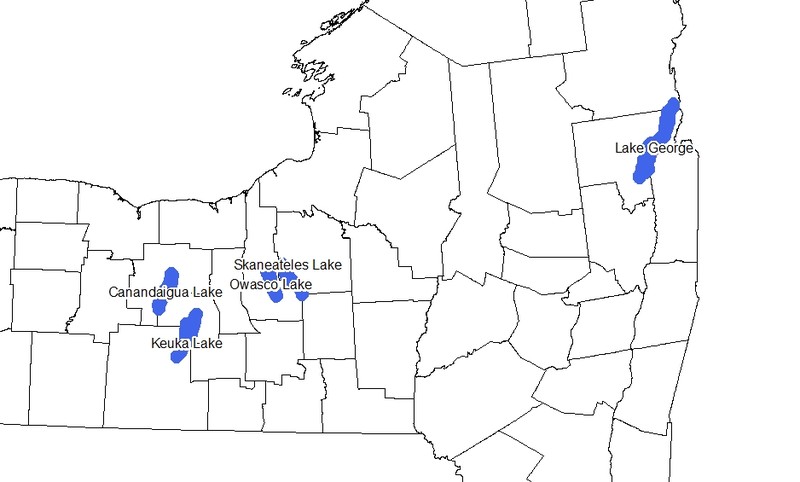
Oligotrophic dimictic lakes are widespread throughout New York State, and are especially common in the Adirondack Mountains. Examples include the following lakes: Lake George, Warren and Essex Counties; Schroon Lake, Essex and Warren Counties; Wolf Pond, Essex County; Lake Lila, Hamilton County; Pine Pond, Franklin County; Chubb Lake, St. Lawrence County; Shaver Pond, Rensselaer County; Canadaigua Lake, Ontario and Yates Counties; Keuka Lake, Yates and Steuben Counties; Owasco Lake, Cayuga County; Skaneateles Lake, Onondaga and Cayuga Counties.
Global Distribution
This broadly-defined community may be worldwide. Examples with the greatest biotic affinities to New York occurrences are suspected to span north to southern Canada, west to Minnesota, southwest to Indiana and Tennessee, and southeast to North Carolina.
Best Places to See
- Lake George (Essex, Warren, Washington Counties)
- Pine Pond (Franklin County)
- Shaver Pond (Rensselaer County)
- Canandaigua Lake (Ontario, Yates Counties)
- Keuka Lake (Steuben, Yates Counties)
- Owasco Lake (Cayuga County)
- Skaneateles Lake (Cayuga, Onondaga Counties)
Identification Comments
General Description
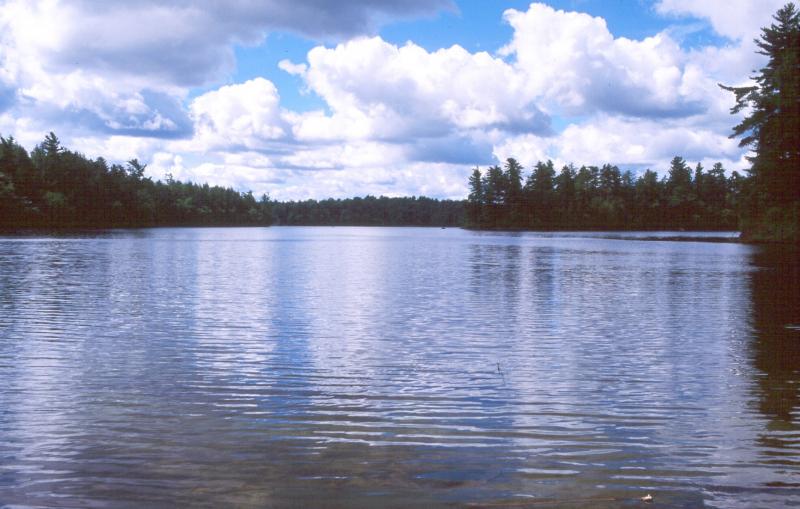
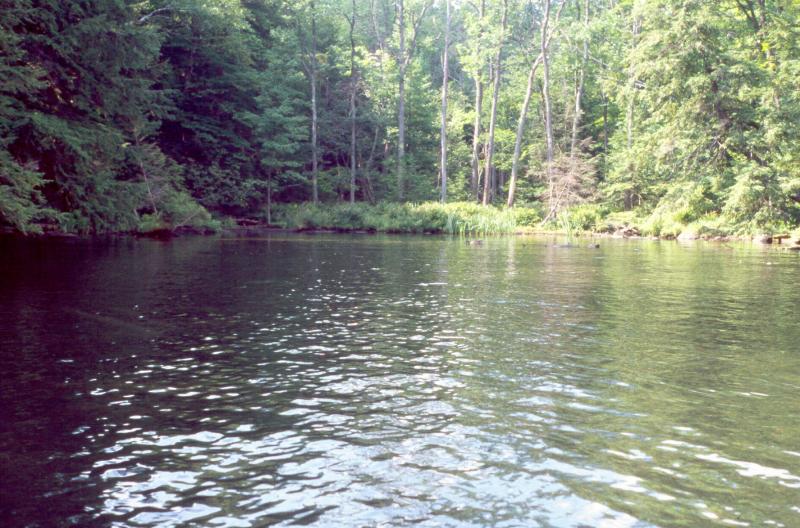
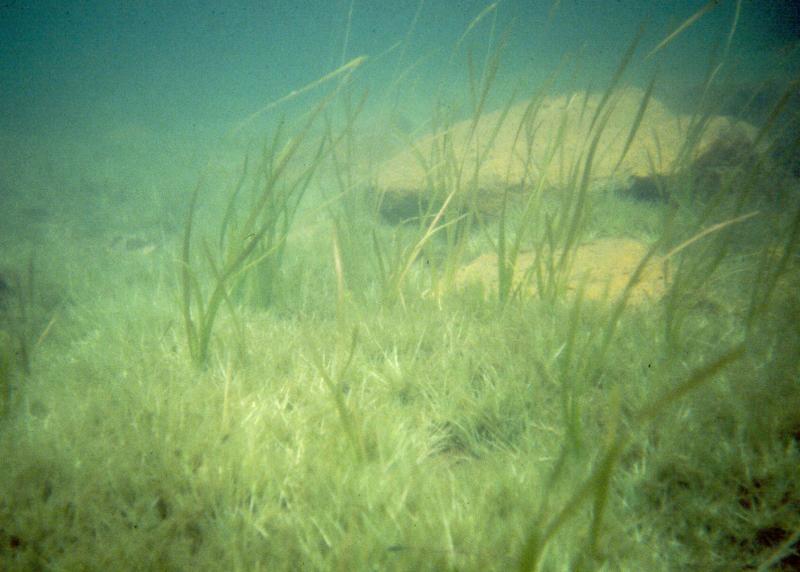
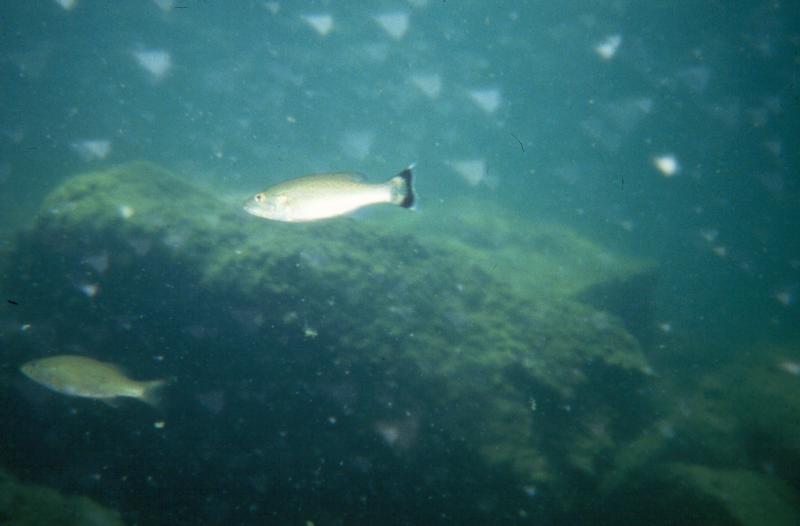
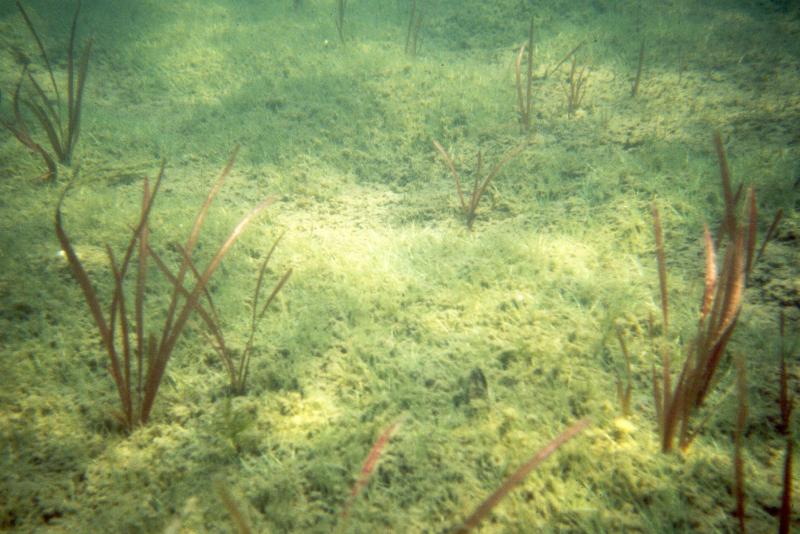
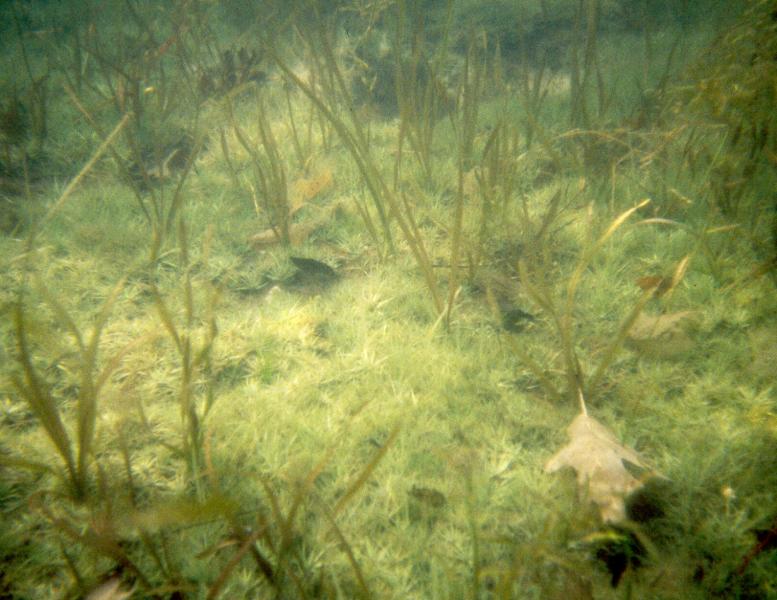
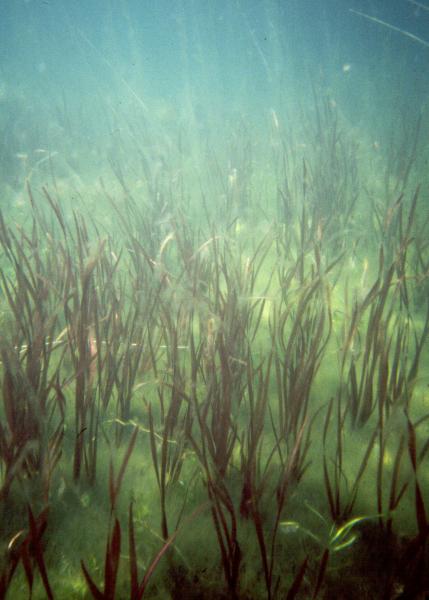
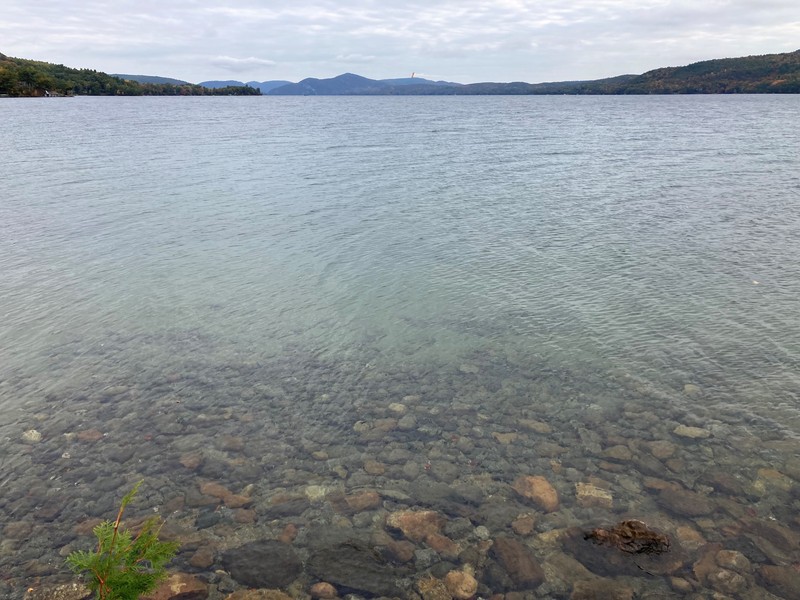
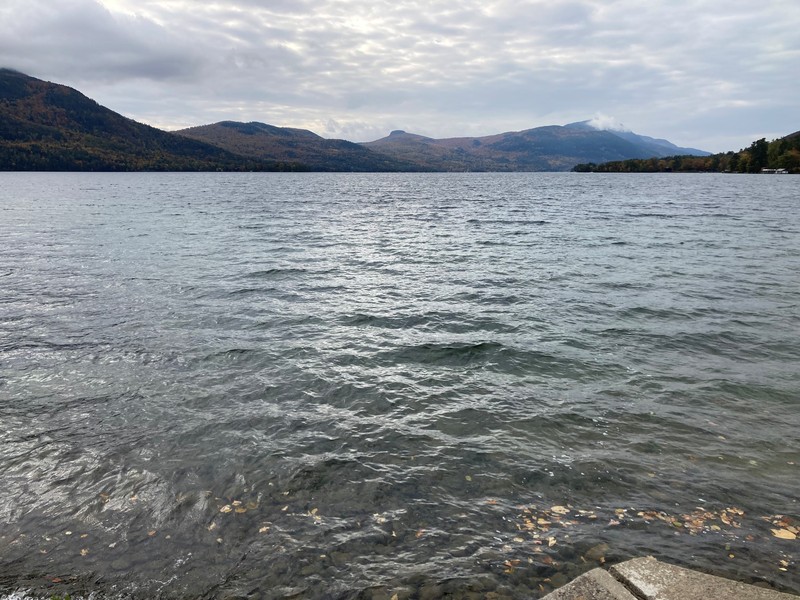
Oligotrophic dimictic lake communities are the aquatic communities of nutrient-poor lakes that often occur in deep, steeply-banked basins. The lakes are dimictic, meaning they have two periods of mixing and turnover (spring and fall); they are stratified in the summer, then they freeze in winter and become inversely stratified. Common physical characteristics of oligotrophic lake communities include blue or green highly transparent water (Secchi disk depths from 4 to 8 m), low dissolved nutrients (especially nitrogen and calcium), low primary productivity, and sediment with low levels of organic matter. Additionally, the lakes have an epilimnion volume that is low relative to the hypolimnion, high dissolved oxygen levels year-round through all strata, and low alkalinity. The plant community is primarily in the shallow parts of the lake, between 1 and 3 m (3 to 10 feet), and is dominated by rosette-leaved aquatic species. Characteristic species include seven-angle pipewort (Eriocaulon aquaticum), water lobelia (Lobelia dortmanna), quillworts (Isoetes echinospora ssp. muricata, I. lacustris), milfoils (Myriophyllum alterniflorum, M. tenellum), bladderworts (Utricularia purpuea, U. resupinata), tape grass (Vallisneria americana), and creeping buttercup (Ranunculus repens). The zoological community of oligotrophic dimictic lakes are diverse, and include a variety fish and invertebrates, but in low abundances. In the shallow areas the characteristic fishes are warm water species, such as smallmouth bass (Micropterus dolomieui), redbreast sunfish (Lepomis auritus), pumpkinseed (L. gibbosus), rock trout (Ambloplites rupestris), and yellow perch (Perca flavescens). In the deeper waters, cold water species, such as lake trout (Salvelinus namaycush) and round whitefish (Prosopium cylindraceium) are common. Characteristic mollusks include freshwater mussels such as eastern lampmussel (Lampsilis radiata), eastern elliptio (Elliptio complanata), and eastern floater (Pyganodon cataracta), and snail species such as ramshorn snail (Heliosoma trivolvis), physid snail (Physa heterostropha), and amnicolas (Amnicola spp.). Other invertebrate species characteristic of oligotrophic dimictic lakes are midge larvae, such as Tanytarsus spp. and Procladious spp., caddisflies (order Trichoptera), and oligochaete worms (order Oligochaeta). A variety of phytoplankton and zooplankton species are present in oligotrophic dimictic lakes. Desmids (Staurastrum spp.), chrysophytes (Dinobryum spp.), and diatoms (Tabellaria, Cyclotella, Asterionella) are among the phytoplankton present, and rotifers (Phylum rotifera), copepods (Class Copepoda), and water fleas (Daphnia spp.) are often present in the zooplankton community.
Characters Most Useful for Identification
A nutrient-poor lake within a deep, steeply-banked basin, with very clear water that is blue or green. Oligotrophic lakes have two cycles of mixing per year, and are characterized by low primary productivity, high dissolved oxygen, and low alkalinity. The plant community includes rosette-leaved species such as water lobelia (Lobelia dortmanna) and seven-angled pipewort (Eriocaulon septangulare), and floating aquatic species such as tape grass, milfoil, pondweed, and bladderwort.
Elevation Range
Known examples of this community have been found at elevations between 128 feet and 1,468 feet.
Best Time to See
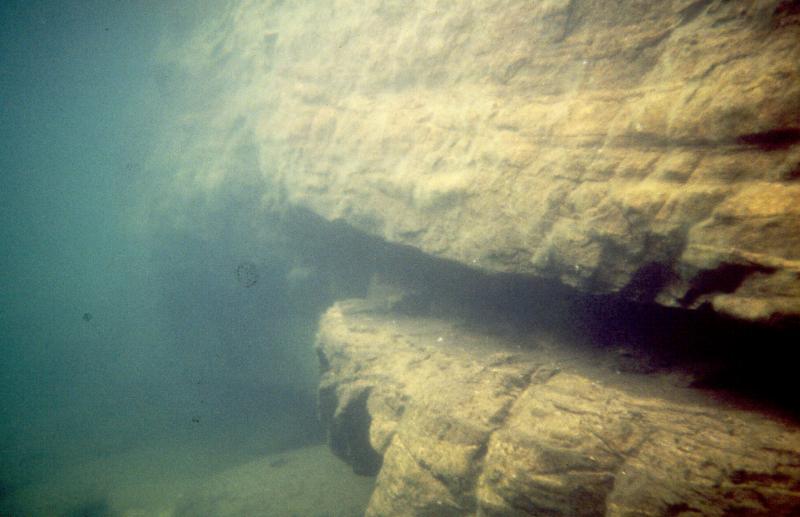
The characteristic flora of oligotrophic dimictic lakes is at its peak in mid to late summer. Aquatic plant species such as water lobelia and bladderwort can be observed in bloom at this time. Since these lakes have very clear water they are great to explore by snorkeling.
Oligotrophic Dimictic Lake Images
David M. Hunt
David M. Hunt
David M. Hunt
David M. Hunt
David M. Hunt
David M. Hunt
David M. Hunt
David M. Hunt
Gregory J. Edinger
Gregory J. Edinger
Classification
Characteristic Species
-
Nonvascular plants
- Nitella flexilis (smooth stonewort)
-
Floating-leaved aquatics
- Potamogeton gramineus (grass-leaved pondweed)
-
Submerged aquatics
- Elatine minima (lesser waterwort)
- Eriocaulon aquaticum (northern pipewort, northern hat-pins)
- Isoetes echinospora ssp. muricata (spiny-spored quillwort)
- Isoetes lacustris (lake quillwort)
- Lobelia dortmanna (water lobelia)
- Myriophyllum alterniflorum (alternate-flowered water milfoil)
- Myriophyllum tenellum (slender water milfoil)
- Potamogeton gramineus (grass-leaved pondweed)
- Potamogeton perfoliatus (clasping-leaved pondweed)
- Potamogeton robbinsii (Robbins's pondweed, fern pondweed)
- Ranunculus flammula var. reptans (narrow-leaved creeping spearwort)
- Utricularia purpurea (purple bladderwort)
- Utricularia resupinata (reclined bladderwort)
- Vallisneria americana (water-celery, tape-grass)
-
Unvegetated
- alderflies (Sialis spp.)
- amnicolas (Amnicola spp.)
- caddisflies (Trichoptera)
- eastern elliptio (Elliptio complanata)
- eastern floater (Pyganodon cataracta)
- eastern lampmussel (Lampsilis radiata)
- lake trout (Salvelinus namaycush)
- mayflies (Stenonoma spp.)
- midge larvae (Tanytarsus sp.)
- midges (Heterotrissocladius spp.)
- midges (Procladious spp.)
- mottled sculpin (C. bairdi)
- mystery snail (Campeloma decisum)
- oligochaetes (Oligochaeta)
- physid snail (Physa heterostropha)
- phytoplankton - chrysophytes (Dinobryum spp.)
- phytoplankton - desmids (Staurastrum spp.)
- phytoplankton - diatoms (Asterionella (spp.)
- phytoplankton -diatoms (Cyclotella spp.)
- phytoplankton - diatoms (Tabellari spp.)
- pumpkinseed (Lepomis gibbosus)
- ramshorn snail (Heliosoma trivolvis)
- rock bass (Ambloplites rupestris)
- round whitefish (Prosopium cylindraceum)
- slimy sculpin (Cottus cognatus)
- smallmouth bass (Micropterus dolomieui)
- yellow perch (Perca flavescens)
- zooplankton - cladocerans
- zooplankton - copepods
- zooplankton - cyclopoids
- zooplankton (Daphnia spp.)
- zooplankton - rotifers
- zooplankton - scuds
Similar Ecological Communities
- Bog lake/pond
(guide)
Bog lake/pond: The aquatic community of a dystrophic lake (an acidic lake with brownish water that contains a high amount of organic matter) that typically occurs in a small, shallow basin (e.g., a kettehole) that is protected from wind and is poorly drained. These lakes occur in areas with non-calcareous bedrock or glacial till; many are fringed or surrounded by a floating mat of vegetation (in New York usually either bog or poor fen). Characteristic features of a dystrophic lake include the following: murky water that is stained brown, with low transparency; water that is low in plant nutrients (especially low in calcium), with naturally low pH (less than 5.4); and the lake may have oxygen deficiencies in deeper water (the profundal zone). The lack of calcium blocks bacterial action, reducing the rate of decay of organic matter with subsequent accumulation of peat or muck sediments. Colloidal and dissolved humus material reduces transparency and increases acidity of the water. Characteristic macrophytes include water-shield (Brasenia schreberi), fragrant white water lily (Nymphaea odorata), yellow pond-lily (Nuphar microphylla, and Nuphar variegata), bladderworts (Utricularia vulgaris, U. geminiscapa, U. purpurea), pondweeds (Potamogeton epihydrus, P. oakesianus), bur-reeds (Sparganium fluctuans, S. angustifolium), and clubrush (Scirpus subterminalis). Characteristic zooplankton may include the rotifers Keratella spp. and Brachionus spp. Oligotrophic dimictic lake: The aquatic community of a nutrient-poor lake that often occurs in deep, steeply-banked basins. These lakes are dimictic, meaning they have two periods of mixing and turnover (spring and fall); they are stratified in the summer, then they freeze in winter and become inversely stratified. Common physical characteristics of oligotrophic lakes include blue or green highly transparent water (Secchi disk depths from 4 to 8 m), low dissolved nutrients (especially nitrogen and calcium), low primary productivity, and sediment with low levels of organic matter. Additionally, the lakes have an epilimnion volume that is low relative to the hypolimnion, high dissolved oxygen levels year-round through all strata, and low alkalinity. The plant community is primarily in the shallow parts of the lake, between 1 and 3 m (3 to 10 feet), and is dominated by rosette-leaved aquatic species. Characteristic species include seven-angle pipewort (Eriocaulon aquaticum), water lobelia (Lobelia dortmanna), quillworts (Isoetes echinospora ssp. muricata, I. lacustris), milfoils (Myriophyllum alterniflorum, M. tenellum), bladderworts (Utricularia purpuea, U. resupinata), tape grass (Vallisneria americana), and creeping buttercup (Ranunculus repens).
- Eutrophic dimictic lake
(guide)
Eutrophic dimictic lake: The aquatic community of a nutrient-rich lake that occurs in a broad, shallow basin. These lakes are dimictic: they have two periods of mixing or turnover (spring and fall); they are thermally stratified in the summer, and they freeze over and become inversely stratified in the winter. Aquatic macrophytes are abundant in shallow water, and there are many species present, but species diversity is generally lower than in mesotrophic lakes. Characteristic plants include tapegrass (Vallisneria americana), pondweeds (Potamogeton spp.), bur-reeds (Sparganium spp.), and the floating aquatic plants white water-lily (Nymphaea spp.), yellow pond-lily (Nuphar luteum), and water-shield (Brasenia schreberi). Characteristic features of a eutrophic lake include the following: yellow, green, or brownish-green water that is murky, with low transparency (Secchi disk depths typically less than 2.5 m, but up to 4 m in some cases); water rich in plant nutrients (especially high in phosphorus, nitrogen and calcium); high primary productivity (inorganic carbon fixed = 75 to 250 g/m2/yr); lake sediments that are rich in organic matter (usually consisting of a fine organic silt or copropel); water that is well-oxygenated above the summer thermocline, but oxygen-depleted below the summer thermocline or under ice; epilimnion volume that is relatively large compared with hypolimnion; and a weedy shoreline. Alkalinity is typically high (greater than 12.5 mg/l calcium carbonate). Oligotrophic dimictic lake: The aquatic community of a nutrient-poor lake that often occurs in deep, steeply-banked basins. These lakes are dimictic, meaning they have two periods of mixing and turnover (spring and fall); they are stratified in the summer, then they freeze in winter and become inversely stratified. Common physical characteristics of oligotrophic lakes include blue or green highly transparent water (Secchi disk depths from 4 to 8 m), low dissolved nutrients (especially nitrogen and calcium), low primary productivity, and sediment with low levels of organic matter. Additionally, the lakes have an epilimnion volume that is low relative to the hypolimnion, high dissolved oxygen levels year-round through all strata, and low alkalinity. The plant community is primarily in the shallow parts of the lake, between 1 and 3 m (3 to 10 feet), and is dominated by rosette-leaved aquatic species. Characteristic species include seven-angle pipewort (Eriocaulon aquaticum), water lobelia (Lobelia dortmanna), quillworts (Isoetes echinospora ssp. muricata, I. lacustris), milfoils (Myriophyllum alterniflorum, M. tenellum), bladderworts (Utricularia purpuea, U. resupinata), tape grass (Vallisneria americana), and creeping buttercup (Ranunculus repens).
- Eutrophic pond
(guide)
Eutrophic ponds: The aquatic community of a small, shallow, nutrient-rich pond. Species diversity is typically high. Aquatic vegetation is abundant. Characteristic plants include coontail (Ceratophyllum demersum), duckweeds (Lemna minor, L. trisulca), waterweed (Elodea canadensis), pondweeds (Potamogeton spp.), water starwort (Heteranthera dubia), bladderworts (Utricularia spp.), naiad (Najas flexilis), tapegrass or wild celery (Vallisneria americana), algae (Cladophora spp.), common yellow pond-lily (Nuphar variegata), and white water-lily (Nymphaea odorata). The water is usually green with algae, and the bottom is mucky. Eutrophic ponds are too shallow to remain thermally stratified throughout the summer; they often freeze and become inversely stratified in the winter (coldest water at the surface), therefore they are winter-stratified monomictic ponds. Additional characteristic features of a eutrophic pond include the following: water that is murky, with low transparency (Secchi disk depths typically less than 4 m); water rich in plant nutrients (especially high in phosphorus, nitrogen, and calcium), high primary productivity (inorganic carbon fixed = 75 to 250 g/m2/yr) and a weedy shoreline. Alkalinity is typically high (greater than 12.5 mg/l calcium carbonate). Oligotrophic dimictic lake: The aquatic community of a nutrient-poor lake that often occurs in deep, steeply-banked basins. These lakes are dimictic, meaning they have two periods of mixing and turnover (spring and fall); they are stratified in the summer, then they freeze in winter and become inversely stratified. Common physical characteristics of oligotrophic lakes include blue or green highly transparent water (Secchi disk depths from 4 to 8 m), low dissolved nutrients (especially nitrogen and calcium), low primary productivity, and sediment with low levels of organic matter. Additionally, the lakes have an epilimnion volume that is low relative to the hypolimnion, high dissolved oxygen levels year-round through all strata, and low alkalinity. The plant community is primarily in the shallow parts of the lake, between 1 and 3 m (3 to 10 feet), and is dominated by rosette-leaved aquatic species. Characteristic species include seven-angle pipewort (Eriocaulon aquaticum), water lobelia (Lobelia dortmanna), quillworts (Isoetes echinospora ssp. muricata, I. lacustris), milfoils (Myriophyllum alterniflorum, M. tenellum), bladderworts (Utricularia purpuea, U. resupinata), tape grass (Vallisneria americana), and creeping buttercup (Ranunculus repens).
- Meromictic lake
(guide)
Meromictic lake: the aquatic community of a relatively deep lake with small surface area that is so protected from wind-stirring that it has no annual periods of complete mixing, and remains chemically stratified throughout the year. These lakes may be protected from mixing by a sheltered surrounding landscape (e.g., a deep basin) or by adjacent tree cover. Meromictic lakes in New York freeze over and become inversely stratified in the winter (coldest water at the surface); they pass through spring, and fall periods of isothermy without circulating. Meromictic lakes frequently have dichothermic stratification, meaning that the minimum temperature occurs in the middle stratum. The stagnant waters in the lower part of a meromictic lake become heavily loaded with dissolved salts, and lack oxygen. Chemical stratification is most often measured by salinity gradients, or total cation and anion concentrations. Gradients may be present for chemicals, such as hydrogen sulfide, ammonia, phosphorus, or iron. Flushing rates are typically low. Some examples of this lake type may be dystrophic, and thus resemble bog lakes. Species diversity is low because very few organisms can tolerate the extreme chemical conditions of the lower strata of a meromictic lake. Fishes are absent or sparse. Oligotrophic dimictic lake: The aquatic community of a nutrient-poor lake that often occurs in deep, steeply-banked basins. These lakes are dimictic, meaning they have two periods of mixing and turnover (spring and fall); they are stratified in the summer, then they freeze in winter and become inversely stratified. Common physical characteristics of oligotrophic lakes include blue or green highly transparent water (Secchi disk depths from 4 to 8 m), low dissolved nutrients (especially nitrogen and calcium), low primary productivity, and sediment with low levels of organic matter. Additionally, the lakes have an epilimnion volume that is low relative to the hypolimnion, high dissolved oxygen levels year-round through all strata, and low alkalinity. The plant community is primarily in the shallow parts of the lake, between 1 and 3 m (3 to 10 feet), and is dominated by rosette-leaved aquatic species. Characteristic species include seven-angle pipewort (Eriocaulon aquaticum), water lobelia (Lobelia dortmanna), quillworts (Isoetes echinospora ssp. muricata, I. lacustris), milfoils (Myriophyllum alterniflorum, M. tenellum), bladderworts (Utricularia purpuea, U. resupinata), tape grass (Vallisneria americana), and creeping buttercup (Ranunculus repens).
- Mesotrophic dimictic lake
(guide)
Mesotrophic dimictic lake: The aquatic community of a lake that is intermediate between an oligotrophic lake and a eutrophic lake. These lakes are dimictic: they have two periods of mixing or turnover (spring and fall), they are thermally stratified in the summer (warmest water at the surface), and they freeze over and become inversely stratified in the winter (coldest water at the surface). These lakes typically have a diverse mixture of submerged macrophytes, such as several species of pondweeds (Potamogeton amplifolius, P. praelongus, P. robbinsii), water celery or tape grass (Vallisneria americana), and bladderworts (Utricularia spp.). Characteristic features of a mesotrophic lake include the following: water with medium transparency (Secchi disk depths of 2 to 4 m); water with moderate amounts of plant nutrients; moderate primary productivity (inorganic carbon fixed = 25 to 75 g/m2/yr); lake sediments with moderate amounts of organic matter; and moderately well-oxygenated water. Alkalinity is typically moderate (slightly greater than 12.5 mg/l calcium carbonate). Oligotrophic dimictic lake: The aquatic community of a nutrient-poor lake that often occurs in deep, steeply-banked basins. These lakes are dimictic, meaning they have two periods of mixing and turnover (spring and fall); they are stratified in the summer, then they freeze in winter and become inversely stratified. Common physical characteristics of oligotrophic lakes include blue or green highly transparent water (Secchi disk depths from 4 to 8 m), low dissolved nutrients (especially nitrogen and calcium), low primary productivity, and sediment with low levels of organic matter. Additionally, the lakes have an epilimnion volume that is low relative to the hypolimnion, high dissolved oxygen levels year-round through all strata, and low alkalinity. The plant community is primarily in the shallow parts of the lake, between 1 and 3 m (3 to 10 feet), and is dominated by rosette-leaved aquatic species. Characteristic species include seven-angle pipewort (Eriocaulon aquaticum), water lobelia (Lobelia dortmanna), quillworts (Isoetes echinospora ssp. muricata, I. lacustris), milfoils (Myriophyllum alterniflorum, M. tenellum), bladderworts (Utricularia purpuea, U. resupinata), tape grass (Vallisneria americana), and creeping buttercup (Ranunculus repens).
- Oligotrophic pond
(guide)
Oligotrophic pond: The aquatic community of a small, shallow, nutrient-poor pond. The water is very clear, and the bottom is usually sandy or rocky. Aquatic vegetation is typically sparse, and species diversity is low. Characteristic species are rosette-leaved aquatics such as pipewort (Eriocaulon aquaticum), water lobelia (Lobelia dortmanna), and quillwort (Isoetes echinospora). Oligotrophic ponds are too shallow to remain thermally stratified throughout the summer; they often freeze and become inversely stratified in the winter (coldest water at the surface), therefore they are winter-stratified monomictic ponds. Additional characteristic features of an oligotrophic pond include the following: blue or green water with high transparency (Secchi disk depths of 4 to 8 m); water low in plant nutrients (especially low in nitrogen, also low in calcium); low primary productivity (inorganic carbon fixed = 7 to 25 g/m2/yr). Alkalinity is typically low (less than 12.5 mg/l calcium carbonate). Oligotrophic dimictic lake: The aquatic community of a nutrient-poor lake that often occurs in deep, steeply-banked basins. These lakes are dimictic, meaning they have two periods of mixing and turnover (spring and fall); they are stratified in the summer, then they freeze in winter and become inversely stratified. Common physical characteristics of oligotrophic lakes include blue or green highly transparent water (Secchi disk depths from 4 to 8 m), low dissolved nutrients (especially nitrogen and calcium), low primary productivity, and sediment with low levels of organic matter. Additionally, the lakes have an epilimnion volume that is low relative to the hypolimnion, high dissolved oxygen levels year-round through all strata, and low alkalinity. The plant community is primarily in the shallow parts of the lake, between 1 and 3 m (3 to 10 feet), and is dominated by rosette-leaved aquatic species. Characteristic species include seven-angle pipewort (Eriocaulon aquaticum), water lobelia (Lobelia dortmanna), quillworts (Isoetes echinospora ssp. muricata, I. lacustris), milfoils (Myriophyllum alterniflorum, M. tenellum), bladderworts (Utricularia purpuea, U. resupinata), tape grass (Vallisneria americana), and creeping buttercup (Ranunculus repens).
- Summer-stratified monomictic lake
(guide)
Summer-stratified monomictic lakes are so deep (or large) that they have only one period of mixing or turnover each year (monomictic), and one period of stratification. These lakes generally do not freeze over in winter (except in unusually cold years), or form only a thin or sporadic ice cover during the coldest parts of midwinter, so the water circulates and is isothermal during the winter (similar temperature though the water column). These lakes are typically thermally stratified only in the summer (warmest water at the surface); they are oligotrophic to mesotrophic and alkaline. Characteristic aquatic macrophytes include pondweeds (Potamogeton gramineus, P. richardsonii, P. pectinatus), horned pondweed (Zannichellia palustris), naiad (Najas flexilis), waterweed (Elodea canadensis), tapegrass or wild celery (Vallisneria americana), and coontail (Ceratophyllum demersum). Oligotrophic dimictic lake: The aquatic community of a nutrient-poor lake that often occurs in deep, steeply-banked basins. These lakes are dimictic, meaning they have two periods of mixing and turnover (spring and fall); they are stratified in the summer, then they freeze in winter and become inversely stratified. Common physical characteristics of oligotrophic lakes include blue or green highly transparent water (Secchi disk depths from 4 to 8 m), low dissolved nutrients (especially nitrogen and calcium), low primary productivity, and sediment with low levels of organic matter. Additionally, the lakes have an epilimnion volume that is low relative to the hypolimnion, high dissolved oxygen levels year-round through all strata, and low alkalinity. The plant community is primarily in the shallow parts of the lake, between 1 and 3 m (3 to 10 feet), and is dominated by rosette-leaved aquatic species. Characteristic species include seven-angle pipewort (Eriocaulon aquaticum), water lobelia (Lobelia dortmanna), quillworts (Isoetes echinospora ssp. muricata, I. lacustris), milfoils (Myriophyllum alterniflorum, M. tenellum), bladderworts (Utricularia purpuea, U. resupinata), tape grass (Vallisneria americana), and creeping buttercup (Ranunculus repens).
- Winter-stratified monomictic lake
(guide)
Winter-stratified monomictic lakes have only one period of mixing each year because they are very shallow in relation to its size and is completely exposed to winds. These lakes continue to circulate throughout the summer and typically never become thermally stratified in that season. They are only stratified in the winter when they freeze over and become inversely stratified (coldest water at the surface). They are eutrophic to mesotrophic. Littoral, and epilimnion species assemblages predominate. Pelagic species assemblages are well developed. Vascular plants are typically diverse. Characteristic aquatic macrophytes include water stargrass (Heteranthera dubia), coontail (Ceratophyllum demersum), waterweed (Elodea spp.), naiad (Najas flexilis), tapegrass (Vallisneria americana), and pondweeds (Potamogeton perfoliatus, P. pectinatus, P. pusillus, P. richardsonii, P. nodosus, P. zosteriformis). The macroalgae Chara may be abundant. Oligotrophic dimictic lake: The aquatic community of a nutrient-poor lake that often occurs in deep, steeply-banked basins. These lakes are dimictic, meaning they have two periods of mixing and turnover (spring and fall); they are stratified in the summer, then they freeze in winter and become inversely stratified. Common physical characteristics of oligotrophic lakes include blue or green highly transparent water (Secchi disk depths from 4 to 8 m), low dissolved nutrients (especially nitrogen and calcium), low primary productivity, and sediment with low levels of organic matter. Additionally, the lakes have an epilimnion volume that is low relative to the hypolimnion, high dissolved oxygen levels year-round through all strata, and low alkalinity. The plant community is primarily in the shallow parts of the lake, between 1 and 3 m (3 to 10 feet), and is dominated by rosette-leaved aquatic species. Characteristic species include seven-angle pipewort (Eriocaulon aquaticum), water lobelia (Lobelia dortmanna), quillworts (Isoetes echinospora ssp. muricata, I. lacustris), milfoils (Myriophyllum alterniflorum, M. tenellum), bladderworts (Utricularia purpuea, U. resupinata), tape grass (Vallisneria americana), and creeping buttercup (Ranunculus repens).
Vegetation
Percent cover
This figure helps visualize the structure and "look" or "feel" of a typical Oligotrophic Dimictic Lake. Each bar represents the amount of "coverage" for all the species growing at that height. Because layers overlap (shrubs may grow under trees, for example), the shaded regions can add up to more than 100%.
Additional Resources
References
Bloomfield, J.A., ed. 1978a. Lakes of New York State. Vol. I. Ecology of the Finger Lakes. Academic Press, New York.
Cole, G.A. 1979. Textbook of limnology. The C.V. Mosby Co., Saint Louis, MO.
Edinger, G. J., D. J. Evans, S. Gebauer, T. G. Howard, D. M. Hunt, and A. M. Olivero (editors). 2014. Ecological Communities of New York State. Second Edition. A revised and expanded edition of Carol Reschke’s Ecological Communities of New York State. New York Natural Heritage Program, New York State Department of Environmental Conservation, Albany, NY. https://www.nynhp.org/ecological-communities/
Ferris, J.J., N.J. Clescesi, and D.B. Aulenbach. 1980. The limnology of Lake George, New York. Rensselaer Freshwater Institute, Report # 76-5, Troy, New York. 188 pp.
Hunt, David M. 1999. Lake George watershed ecological community map. Unpublished report. February 25, 1999. New York Natural Heritage Program, New York State Department of Environmental Conservation. Latham, NY. 8 pp.
Jenkins, J., K. Roy, C. Driscoll, and C. Buerkett. 2005. Acid rain and the Adirondacks: A research summary. Adirondacks Lakes Survey Corporation, Ray Brook, New York
Maitland, P.S. 1978. Biology of fresh waters. John Wiley, and Sons, New York.
New York Natural Heritage Program. 2024. New York Natural Heritage Program Databases. Albany, NY.
Nichols, W. F. 2015. Natural Freshwater Lakes and Ponds in New Hampshire: Draft Classification. NH Natural Heritage Bureau, Concord, NH.
Olivero-Sheldon, A. and M.G. Anderson. 2016. Northeast Lake and Pond Classification. The Nature Conservancy, Eastern Conservation Science, Eastern Regional Office. Boston, MA.
Reschke, Carol. 1990. Ecological communities of New York State. New York Natural Heritage Program, New York State Department of Environmental Conservation. Latham, NY. 96 pp. plus xi.
Roberts, D.A., R. Singer, and C.W. Boylen. 1985. The submerged macrophyte communities of Adirondack Lakes (New York, U.S.A) of varying degrees of acidity. Aquat. Bot. 21:219-235.
Links
- Adirondack Lakes Survey Corporation
- Adirondack Park Invasive Plant Program (APIPP) Aquatic Program Early Detection Reports
- Darrin Fresh Water Institute
- Lake George (NYS DEC)
- Lake Lila (NYS DEC)
- Lakes and Rivers (NYS DEC)
- New York State Federation of Lake Associations (NYSFOLA) Aquatic Invasive Species by County
- Northeast Lake and Pond Classification System (TNC)
- Schroon Lake (NYS DEC)
- Shaver Pond (Grafton Lakes State Park)
- Shaver Pond (NYS DEC)
- The Lake George Association
About This Guide
This guide was authored by: Gregory J. Edinger
Information for this guide was last updated on: November 15, 2023
Please cite this page as:
New York Natural Heritage Program. 2024.
Online Conservation Guide for
Oligotrophic dimictic lake.
Available from: https://guides.nynhp.org/oligotrophic-dimictic-lake/.
Accessed April 20, 2024.